
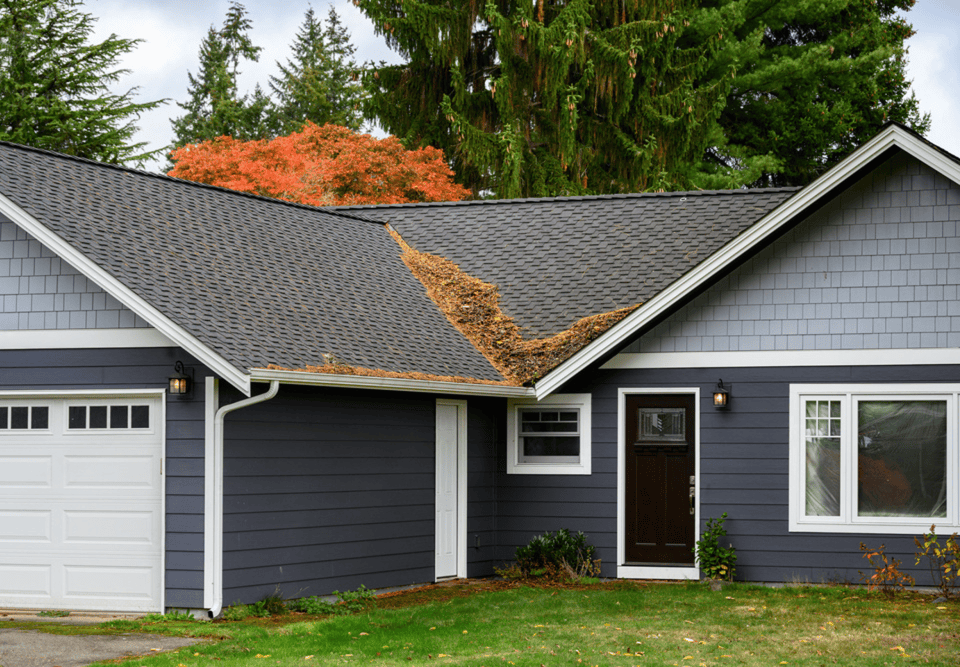
How Falling Leaves Can Cause Roof and Gutter Damage on Scranton Homes
Date Modified: September 20, 2026
Falling leaves can create more than seasonal cleanup for Scranton, PA homeowners. Leaf damage on roofs can develop where debris gathers around valleys, roof penetrations, and gutter lines. Wet debris can hold moisture against roofing surfaces and interfere with normal drainage.
Fall roof maintenance should address both the roof surface and the gutter system. In northeastern Pennsylvania, cool autumn rain and approaching freezes can shorten the window for seasonal cleanup.
Key Takeaways
- Wet leaves can hold moisture against asphalt shingles and keep sections of the roof damp longer.
- Roof debris buildup can obstruct valleys and drainage paths that normally direct rainwater toward the gutters.
- Clogged gutters can disrupt drainage and expose roof edges and fascia to repeated moisture.
- Fall maintenance helps homeowners address drainage concerns before winter brings snow, ice, and freezing temperatures.
How Leaf Buildup Accelerates Roof and Gutter Damage
Leaves do not need to cover an entire roof to create drainage concerns. Around Scranton, mature trees can create concentrated buildup on certain roof sections throughout the fall.
Wet Leaves Can Keep Shingles Damp Longer
Wet leaves on roof surfaces can form dense layers that dry more slowly than exposed shingles. This effect becomes more noticeable in shaded areas with limited sunlight and airflow. Leaves trapping moisture on roof surfaces can keep shingles damp after surrounding areas have dried. Repeated moisture exposure can create unfavorable conditions around asphalt shingles and nearby roofing components.
Debris Can Block Natural Roof Drainage Paths
Roof slopes and valleys direct water toward gutters and away from the home. Roof debris buildup can interrupt that path when leaves collect in valleys or along lower roof edges. These obstructions can slow rainwater and cause it to collect behind the debris. Keeping drainage paths clear supports efficient water movement during Scranton’s wet fall weather.
Clogged Gutters Can Cause Water to Back Up
Gutters collect roof runoff and direct it toward downspouts. Clogged gutters and roof damage can become connected when overflow repeatedly reaches roof edges and fascia. Water may spill over the gutter instead of following the intended drainage path.
For homes with recurring leaf buildup, gutter guards can help manage debris while allowing water to move through the gutter system. Heavy leaf buildup can also add extra weight to gutters.
Downspout Blockages Can Disrupt the Entire System
Leaves and smaller debris can lodge inside a downspout even when the gutter channel looks clear. A blockage can restrict water movement throughout the connected gutter run. During steady autumn rain, runoff may enter the gutter faster than a blocked downspout can release it.
Checking downspout flow helps identify roof drainage problems from leaves that may otherwise remain hidden.
Fall Debris Can Affect Asphalt Shingles
Fall debris and asphalt shingles can create an inspection problem when leaves remain across sections of the roof. Debris can hide shingle edges, surface changes, flashing details, and other areas worth checking. A professional roof inspection can provide a closer evaluation when debris or limited access makes conditions hard to assess. Small visible concerns may go unnoticed until debris moves or professionals remove it.
A clear surface gives homeowners and roofing professionals a better view of roofing conditions.
Seasonal Drainage Priorities for Scranton Homes
Autumn roof care should prepare drainage systems for repeated leaf drop, cold rain, and approaching freezing conditions. Fall roof maintenance in Scranton should focus on keeping water moving freely before winter arrives.
Clear Debris Before It Becomes Saturated
Dry leaves are generally easier to remove than compacted debris that has repeatedly absorbed rain. Saturated leaves can settle more tightly into gutters and other drainage areas. Cool fall conditions can also limit cleanup opportunities between rain events.
Removing heavy buildup early keeps drainage areas more accessible as the season progresses.
Check Gutters After Major Leaf Drop
One early-season cleaning may not keep gutters clear throughout the fall. Mature deciduous trees can continue dropping leaves well after an initial cleanup. A later check can catch fresh buildup that appeared as the season progressed.
This approach helps homeowners avoid relying on one cleaning while leaves are still falling.
Watch Water Flow During Autumn Rain
Autumn rain can reveal drainage problems that remain less noticeable during dry weather. Water spilling over gutter edges or draining slowly may signal an obstruction. Homeowners can safely observe these patterns from ground level during rainfall.
A professional inspection can then identify debris or gutter conditions that interfere with drainage.
Prepare Gutters Before Freezing Temperatures
Any material left inside gutters can become more troublesome once temperatures fall below freezing. Trapped water can freeze around remaining debris and reduce available drainage space. A final pre-freeze check helps identify these conditions before ice makes the system harder to evaluate. Fast temperature changes in northeastern Pennsylvania make that final check especially useful.
Keep Roof Valleys Open for Winter Runoff
Winter runoff needs a clear route when snow and ice begin melting from the roof. Valleys carry much of that meltwater toward the lower roof edge and gutter system. Before the first snow, homeowners can safely inspect visible valley areas from ground level. If an evaluation reveals broader roofing concerns, understanding when roof replacement may be appropriate can help homeowners assess the overall condition of the roofing system.
A professional can inspect areas that appear obstructed or difficult to assess.
Schedule Fall Roof and Gutter Care Before Winter Takes Hold
Dream Home Roofers can evaluate seasonal roof and gutter concerns before Scranton’s colder weather makes exterior conditions harder to assess. The company is an Owens Corning Platinum Preferred Contractor and offers a Lifetime Labor Warranty. Persistent debris, overflowing gutters, or unusual drainage patterns can signal the need for timely professional attention.
For a free roof inspection before winter conditions intensify, contact us while fall conditions still allow a clearer exterior evaluation.
Frequently Asked Questions
Can fallen leaves damage asphalt shingles?
Wet leaves can hold moisture against asphalt shingles for extended periods. Accumulated debris can also hide visible surface concerns. Scranton homeowners can reduce these issues by addressing seasonal buildup before winter weather arrives.
How do leaves in gutters affect a roof?
Leaves can restrict gutter flow and cause water to collect near roof edges. Continued overflow can expose fascia and nearby roofing components to moisture, making timely gutter clearing important.
How often should gutters be checked during fall?
Timing depends on surrounding trees and debris levels. Scranton homeowners may need another check after major leaf drop, especially when mature deciduous trees continue shedding throughout fall.
Should homeowners remove wet leaves from the roof themselves?
Homeowners should avoid climbing onto a roof to remove wet leaves. Elevated surfaces can create safety risks. Visible debris may signal the need for a professional roof and gutter evaluation.
 501 NJ‑168, Turnersville, NJ 08012