
Best Practices for Installing Shingles on a Low Pitch Roof | West Caldwell, NJ
Date Modified: April 7, 2026
Most roofing guides assume a standard pitch. If your home has a low-slope or low-pitch roof, the standard approach doesn’t apply, and using the wrong materials or skipping the right underlayment layers is one of the most common reasons low-pitch roofs fail early. Dream Home Roofers has been installing and replacing roofs across West Caldwell, NJ and the surrounding area for years. We know what these roofs need and what they don’t.
What Counts as a Low Pitch Roof?
Roof pitch is measured as a ratio of vertical rise to horizontal run over 12 inches. A 4:12 pitch rises 4 inches for every 12 inches of horizontal distance. Anything below 4:12 is generally considered low-slope territory, and anything below 2:12 falls into flat or low-slope roofing and requires different materials entirely.
• 4:12 and above: standard asphalt shingles work fine with standard underlayment.
• 2:12 to 4:12 (low pitch): asphalt shingles can work but require a double layer of underlayment and a manufacturer-approved installation method.
• Below 2:12 (low slope): asphalt shingles are not appropriate. Modified bitumen, TPO, or similar low-slope systems are required.
Why Low Pitch Roofs Need Special Attention
Water drains slowly on a low-pitch roof. On a steep-slope roof, rain hits and runs off quickly. On a low-pitch surface, water lingers longer, which puts more pressure on every seal, seam, and fastener. In New Jersey’s climate, that includes freeze-thaw cycles in winter that can force water into any gap that isn’t properly sealed.
New Jersey also gets significant wind-driven rain during nor’easters and late-season storms. Wind-driven rain behaves differently than falling rain and can push water under shingles that would otherwise shed it fine in calm conditions. This is why the underlayment system on a low-pitch roof is more important than on a steeper one.
The Right Way to Shingle a Low Pitch Roof
Underlayment First
On any roof with a pitch between 2:12 and 4:12, New Jersey code requires a double layer of underlayment. In practice, we use a self-adhering ice and water shield for the full surface on pitches this
low, not just at the eaves. This gives you a continuous waterproof barrier underneath the shingles, so if water works its way under a shingle in a wind-driven rain event, it has nowhere to go that damages your decking.
Shingle Selection and Offset
Not all asphalt shingles are rated for low-pitch use. Check the manufacturer’s installation instructions before specifying a product. On low-pitch installations, the shingle exposure, meaning how much of each shingle is left uncovered, needs to be reduced compared to a standard installation. This tightens up the overlap and gives water less opportunity to find a gap.
Fastener Pattern and Starter Course
Wind uplift is a bigger concern on low-pitch roofs than steep ones because the angle of the surface catches wind differently. We use a six-nail fastening pattern on low-pitch applications rather than the standard four-nail pattern, and we always install a full-coverage starter strip along all rakes and eaves, not just the bottom edge.
Common Mistakes on Low Pitch Roofs
• Using standard underlayment instead of full self-adhering membrane coverage.
• Installing shingles at standard exposure instead of reducing it for low-pitch.
• Skipping the six-nail fastening pattern and using four nails instead.
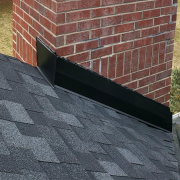
• Not extending flashing far enough up walls and penetrations where the shallow pitch reduces
drainage speed.
• Choosing a shingle that isn’t manufacturer-rated for low-pitch installation.
When a Low Pitch Roof Needs to Be Replaced vs Repaired
If your low-pitch roof is under 15 years old and the damage is isolated, a targeted repair is usually the right call. If it’s over 20 years old, has widespread granule loss, or shows signs of moisture in the decking, a full replacement is almost always the better investment. Patching an aging low-pitch roof tends to just delay the inevitable while adding to the total cost.
What Low Pitch Roofing Costs in West Caldwell, NJ
• Low pitch shingle replacement on a typical West Caldwell home (1,200 to 2,000 sq ft of roof surface): $4,500 to $9,000 including full ice and water shield coverage and removal of the existing roof.
• Modified bitumen installation on a true low-slope or flat section: $6,000 to $12,000 depending on surface area and drainage conditions.
• Homes with decking damage, complex geometry, or multiple penetrations will fall toward the higher end of these ranges.
Frequently Asked Questions: Low Pitch Roof Shingles
What is the minimum roof pitch for asphalt shingles?
The minimum recommended pitch for standard asphalt shingles is 2:12. For pitches between 2:12 and 4:12, code requires a double layer of underlayment and a low-pitch installation method. Below 2:12, asphalt shingles are not appropriate and low-slope roofing materials like modified bitumen are needed instead.
Can you use architectural shingles on a low pitch roof?
Yes, but only on pitches of 4:12 and above under standard installation. For pitches between 2:12 and 4:12, some architectural shingle products are approved for low-pitch use but require a modified installation method with increased overlap and full self-adhering underlayment coverage. Always check the manufacturer’s low-slope specifications before proceeding.
How much does low pitch roofing installation cost in West Caldwell, NJ?
For a typical West Caldwell home, low-pitch shingle installation runs $4,500 to $9,000 including the required self-adhering membrane, tear-off of the existing roof, and all labor. Modified bitumen systems for true low-slope sections run $6,000 to $12,000 depending on size and drainage complexity. Dream Home Roofers provides free written estimates with no obligation.
Do I need a permit to replace a low pitch roof in West Caldwell, NJ?
Yes. West Caldwell, NJ requires a permit for all full roof replacements regardless of pitch. Dream HomeRoofers handles the permit process as part of every full replacement we complete in the area. Any contractor who offers to skip the permit is operating outside the law.

 501 NJ‑168, Turnersville, NJ 08012